Thermoplastic Road Marking
Hot-applied, reflective road marking for highways, junctions, crossings and industrial facilities.
A hot-applied, reflective road marking material
Thermoplastic road marking material is heated until molten and applied directly onto the road surface, where it bonds as it cools into a hard, durable line. Glass beads are dispensed into the material — either premixed or sprayed onto the surface immediately after application — so the finished marking reflects vehicle headlights at night.
This is different from conventional cold-applied road marking paint, which dries by solvent evaporation rather than bonding through heat. Deepam Road Marking carries out both methods; see the general Road Marking page for the full range of line types.
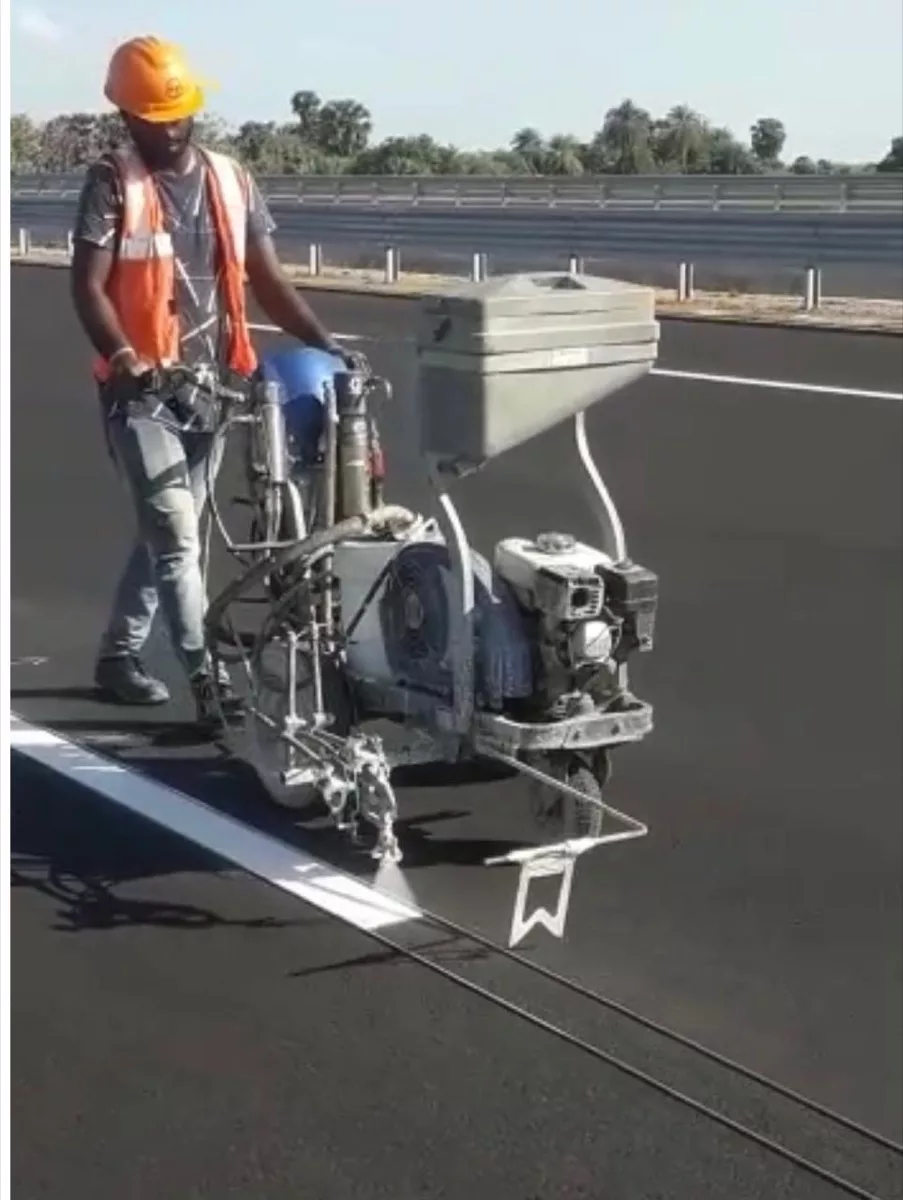
Typical applications
- Highway centre lines, lane markings and edge lines
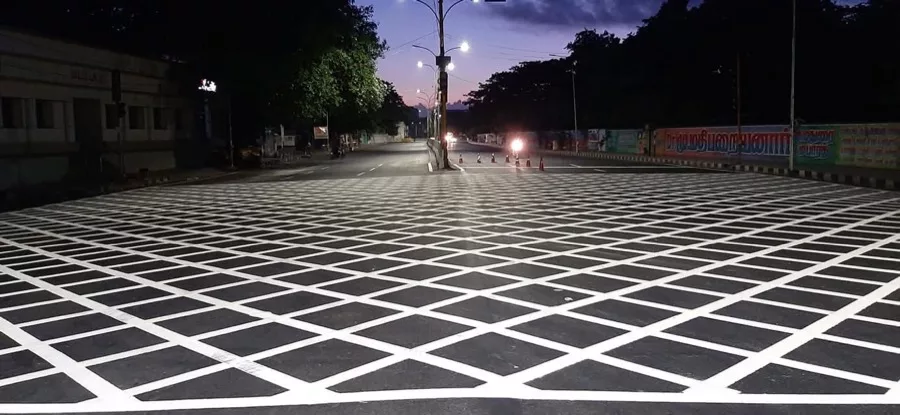
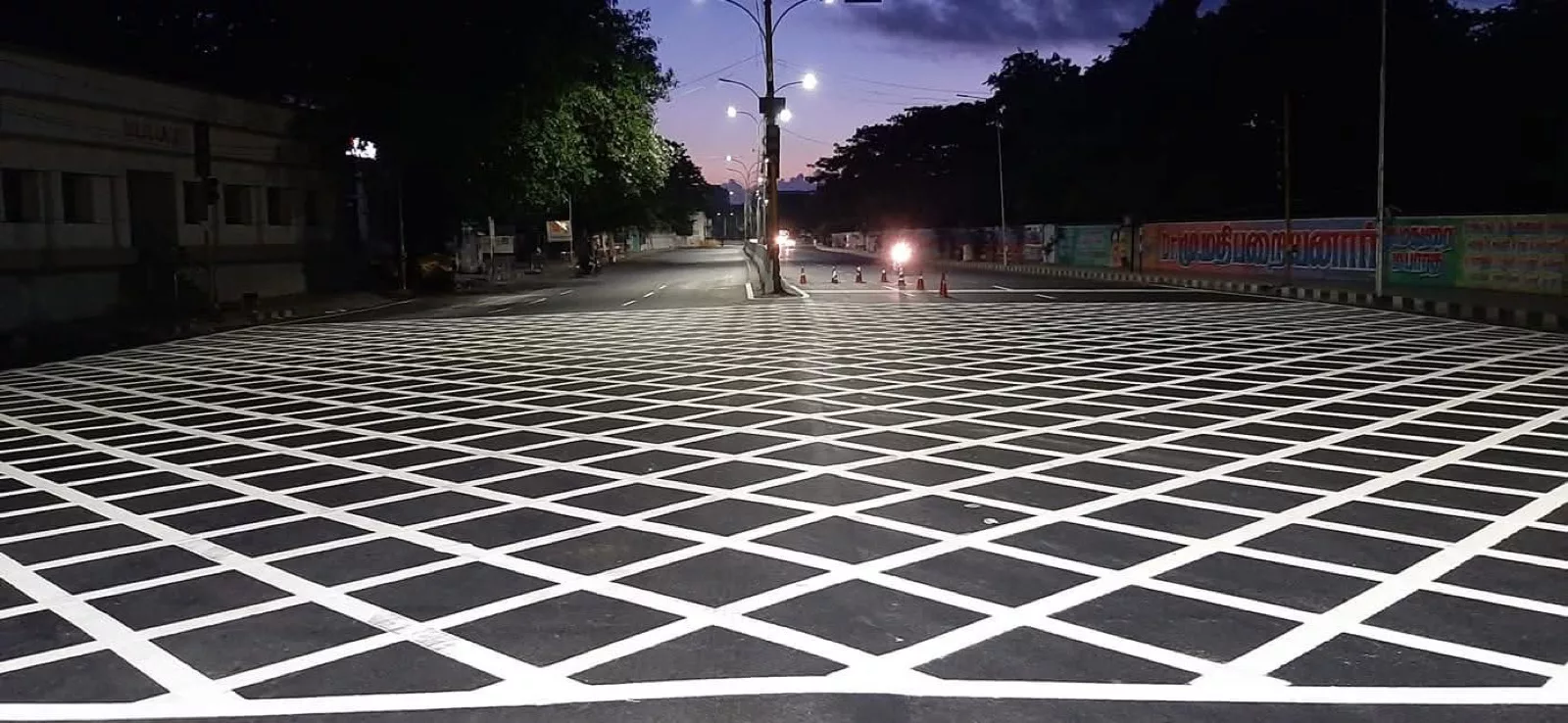
- Junction box-grid markings and stop lines
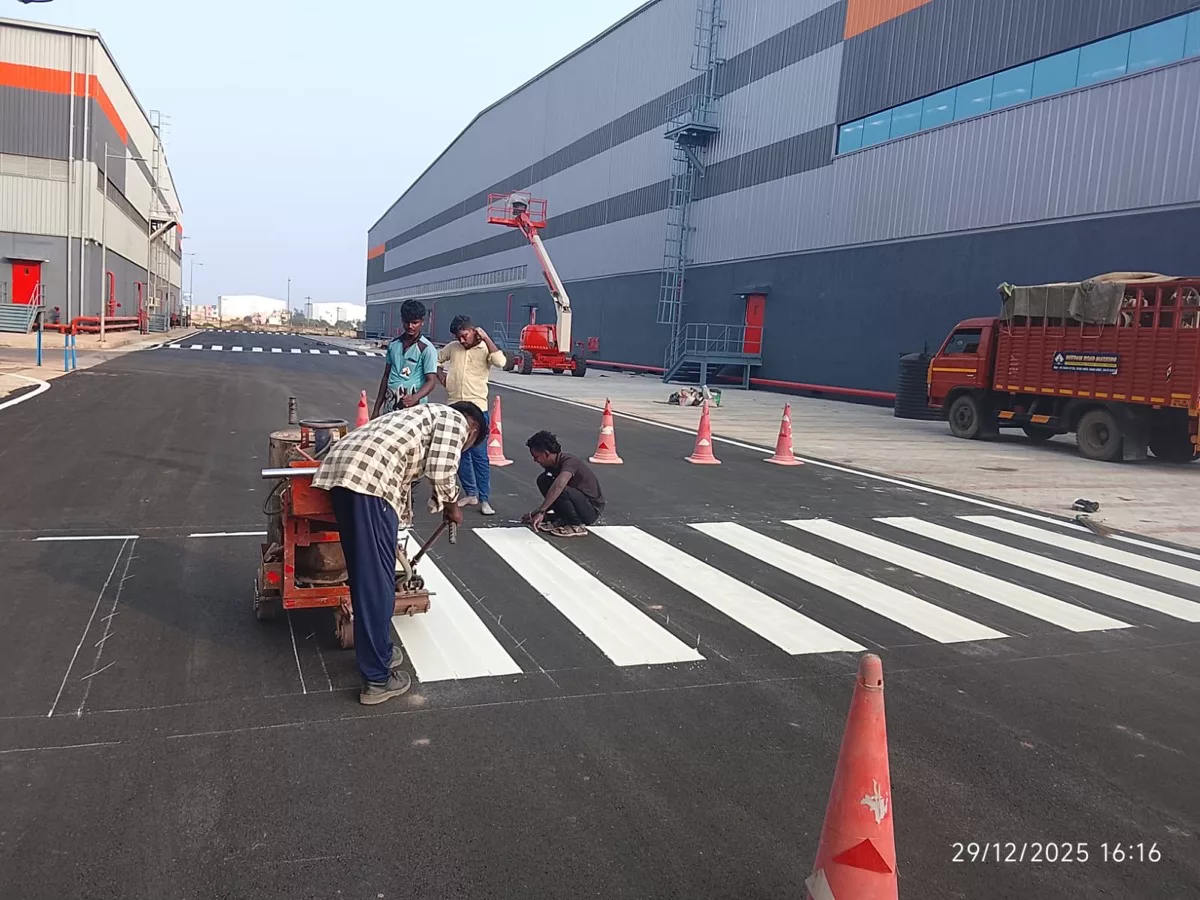
- Zebra / pedestrian crossings
- Directional arrows and word markings (e.g. facility lane markings)
- Industrial and institutional facility access roads and yards
Thermoplastic marking is generally chosen where a more durable, more reflective line is wanted than conventional paint typically provides — for example on higher-traffic roads or junctions.
How thermoplastic marking is applied
1. Heating
Thermoplastic material is heated in a kettle/applicator machine until molten and workable.
2. Application
The molten material is applied to the road surface using a hand-guided or ride-on applicator, to the required line width and pattern.
3. Reflective Beads & Cooling
Glass beads are dispensed onto the surface for retroreflectivity, and the marking bonds to the road as it cools.
Thermoplastic marking by Deepam Road Marking